
WHAT ARE ICF BLOCKS?
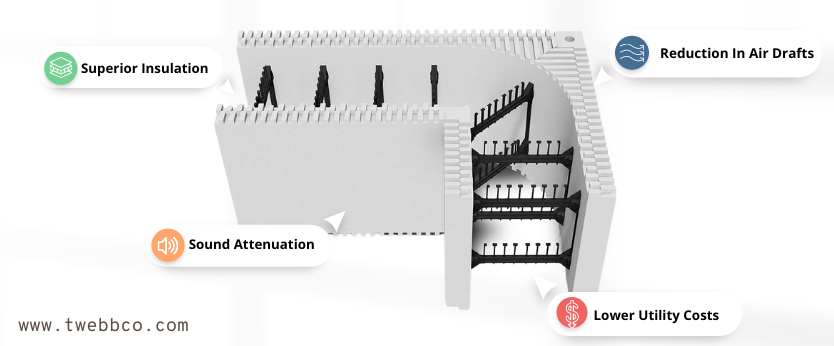
Insulated Concrete Form (ICF) blocks are expanded polystyrene construction materials stacked in the shape of the exterior wall of a building. These blocks are hollow, leaving space where concrete is poured during construction.
This building system is becoming the most preferred construction materials by constructors and homeowners. In ICF construction, polystyrene foam blocks with spaces between them are used. These hollow blocks act as the curing medium for firm concrete walls.

ICF Construction for Homes and Commercial Buildings
How Does It Work?
Building with ICF forms starts by stacking the interlocking forms to create the shape of the walls. Steel reinforcement is then added based on the project’s plans and engineering requirements. Once the forms are aligned and braced, concrete is poured into the hollow center.
After the concrete cures, the foam forms remain in place. This creates a wall system that combines reinforced concrete with continuous insulation. As a result, ICF walls can provide excellent strength, energy efficiency, indoor comfort, and noise reduction.
ICF systems are available in different sizes and insulation levels. Depending on the specific system and project requirements, concrete core thicknesses commonly range from about 4 to 12 inches, with 6- and 8-inch cores frequently used in many applications. The required size depends on factors such as wall height, building design, structural loads, and engineering requirements.
Because of their strength and flexibility, the forms can be used for foundations, above-grade walls, custom homes, and commercial buildings. This makes ICF construction a versatile option for many residential and commercial projects.
WHAT ARE ICF BLOCKS?
Insulated Concrete Form (ICF) blocks are expanded polystyrene construction materials stacked in the shape of the exterior wall of a building. These blocks are hollow, leaving space where concrete is poured during construction.
This building system is becoming the most preferred construction materials by constructors and homeowners. In ICF construction, polystyrene foam blocks with spaces between them are used. These hollow blocks act as the curing medium for firm concrete walls.

ICF Construction for Homes and Commercial Buildings
How Does It Work?
Building with ICF blocks starts by stacking the interlocking forms to create the shape of the walls. Steel reinforcement is then added based on the project’s plans and engineering requirements. Once the forms are aligned and braced, concrete is poured into the hollow center.
After the concrete cures, the foam forms remain in place. This creates a wall system that combines reinforced concrete with continuous insulation. As a result, ICF walls can provide excellent strength, energy efficiency, indoor comfort, and noise reduction.
ICF systems are available in different sizes and insulation levels. Depending on the specific system and project requirements, concrete core thicknesses commonly range from about 4 to 12 inches, with 6- and 8-inch cores frequently used in many applications. The required size depends on factors such as wall height, building design, structural loads, and engineering requirements.
Because of their strength and flexibility, ICF forms can be used for foundations, above-grade walls, custom homes, and commercial buildings. This makes ICF construction a versatile option for many residential and commercial projects.
CONTRACTORS, ORDER YOUR ICF BLOCKS TODAY!
Need ICF blocks for an upcoming construction project? TWebb Construction supplies ICF materials and can help contractors get what they need for their builds. Contact our team to discuss your project, ask questions, or learn more about ordering ICF materials.

CONTACT US
ICF Block
Benefits
ICF construction offers several benefits for homeowners, builders, and commercial property owners. In addition to strength, these wall systems can improve energy efficiency and indoor comfort.
Improved Energy Efficiency
ICF walls provide continuous insulation around the concrete core. As a result, they can reduce unwanted heat transfer through exterior walls.
This can help maintain more consistent indoor temperatures throughout the year. In addition, an energy-efficient building envelope can reduce the demand placed on heating and cooling systems.
Strength and Durability
Strength is another major benefit of ICF blocks. Reinforced concrete forms the structural core of the wall.
The combination of concrete, reinforcement, and insulation creates a durable wall system. Therefore, ICF construction can be a great option for homes and commercial buildings designed for long-term use.
A Quieter Indoor Environment
ICF walls can also help reduce outside noise. The combination of foam insulation and concrete limits the amount of sound that passes through exterior walls.
As a result, homeowners can enjoy a quieter and more comfortable indoor environment.
CONTRACTORS, ORDER YOUR ICF BLOCKS TODAY!
Need ICF blocks for an upcoming construction project? TWebb Construction supplies ICF materials and can help contractors get what they need for their builds. Contact our team to discuss your project, ask questions, or learn more about ordering ICF materials.
CONTACT US
ICF Block
Benefits
ICF construction offers several benefits for homeowners, builders, and commercial property owners. In addition to strength, these wall systems can improve energy efficiency and indoor comfort.
Improved Energy Efficiency
ICF walls provide continuous insulation around the concrete core. As a result, they can reduce unwanted heat transfer through exterior walls.
This can help maintain more consistent indoor temperatures throughout the year. In addition, an energy-efficient building envelope can reduce the demand placed on heating and cooling systems.
Strength and Durability
Strength is another major benefit of ICF blocks. Reinforced concrete forms the structural core of the wall.
The combination of concrete, reinforcement, and insulation creates a durable wall system. Therefore, ICF construction can be a great option for homes and commercial buildings designed for long-term use.
A Quieter Indoor Environment
ICF walls can also help reduce outside noise. The combination of foam insulation and concrete limits the amount of sound that passes through exterior walls.
As a result, homeowners can enjoy a quieter and more comfortable indoor environment.
Frequently Asked Questions